June 26, 2026
What You Must Know When Customizing OEM Metal Enclosures
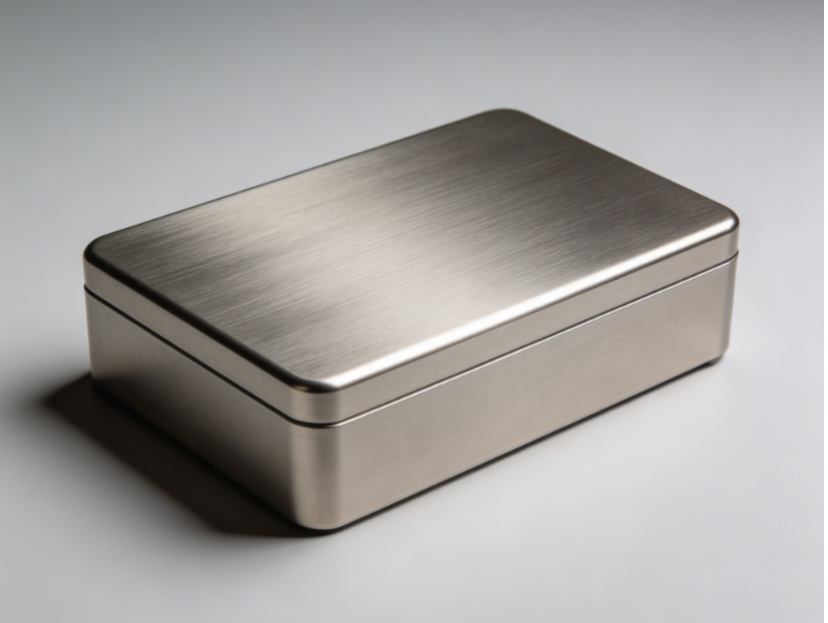
After years on the manufacturing side, I can glance at a customer’s drawing and pretty much tell whether the project will run smooth or become a ping-pong match of blame. The problem is seldom “can we make it”—it’s almost always “the requirements weren‘t thought through at the start.” The seven points below come from late nights chasing mold schedules, fixing anodizing defects, and standing on assembly lines. Every single one ties back to money.
Table of Contents
Lock Down the Manufacturing Process First
“Stainless Steel” Is Not a Material Specification
Every “Tight” Tolerance Adds a Zero to the Quote
Surface Finish Is a Separate Engineering Discipline
Ingress Protection Starts on the Drawing, Not After a Leak
Three Gaps Between Prototype and Mass Production
The Hidden Supply Chain Bill
Summary: A Pre-Order Checklist
FAQ
Lock Down the Manufacturing Process First
The most common request I hear is, “Can you bring the unit price down?” What people rarely realize is that the single biggest factor in unit price isn’t negotiation—it’s the manufacturing process you choose when you cut steel. Once that mold exists, you’re married to that process.
I ask three questions upfront: anticipated annual volume, total lifecycle volume, and the absolute maximum acceptable unit cost. These three numbers point directly to whether or not tooling is justified.
Process | Suitable Volume | Tooling Investment | Unit Cost | Typical Precision |
Sheet metal bending + welding | 1–10,000 | Low (CNC bending) | Medium | ±0.2~0.5 mm |
Stamping (single/transfer/progressive) | 1,000–100,000+ | Medium–High (die set) | Low | ±0.05~0.15 mm |
Die casting (aluminum/zinc) | 3,000–100,000+ | High (die casting mold) | Low | ±0.1~0.2 mm |
Aluminum extrusion + CNC machining | 500–50,000 | Medium (extrusion die) | Medium | High |
Full CNC machining | 1–500 | Very low | Very high | ±0.01~0.05 mm |
I once saw a project with an annual demand of 300 control boxes insist on a die-casting mold. The mold cost ¥180,000; amortized over 300 units, that’s ¥600 per enclosure just for the mold—way more than CNC machining would have been. On the flip side, a 20,000-unit-per-year 19-inch rack chassis refused to invest in a progressive die, and the two-year accumulated extra bending and welding costs would have paid for a house. Don’t cheap out on the right process, and don‘t force tooling where it doesn’t belong.
“Stainless Steel” Is Not a Material Specification
A drawing that just says “Stainless steel” for the enclosure tells me almost nothing. Common stainless grades include 201, 304, 316, and then there’s 410, 430. Indoor dry environment? 201 may work. Central kitchen or coastal climate? Start with 304. Exposed to disinfectants or salt spray? Go straight to 316L—and accept that it’s softer, more likely to gall during tapping, and costs nearly double. Tap breakage in 316L is so common in our shop it barely raises an eyebrow anymore.
Same goes for aluminum. Are you planning to bend sheet (5052), die-cast (ADC12), or anodize (6061/6063)? 6061 machines and anodizes beautifully; 5052 bends without cracking; ADC12 flows well but anodizes terribly—bright-color anodizing on die-cast aluminum is an invitation to waste money. Pick your material with the final surface finish already in mind, or someone will be very unhappy later.
Reference standards: ISO 15510 for stainless grades, EN 573 for aluminum alloys (or your local equivalents).
Every “Tight” Tolerance Adds a Zero to the Quote
Too many drawings are simply exported from someone else’s 3D model: M3 screw holes at ±0.05 mm, overall outline at ±0.1 mm, edge-to-hole distances at ±0.1 mm. Do you know what that means on the shop floor? To hold those extra microns, what could have been a single setup becomes three separate fixturing operations. A standard milling center replaces a drill press. An hour of machining becomes three. The unit price will at least double if you‘re lucky.
ISO 2768-1 class “m” gives ±0.2 mm in the 30–120 mm range, and that’s perfectly reasonable for most sheet metal and stamping features. Reserve ±0.05 mm only for the features that actually require it: dowel pin locations, bearing bores, seal grooves. Put your tolerance budget where it matters, and let the rest breathe—your supplier‘s quote will carry far fewer hidden “safety factors.”
Surface Finish Is a Separate Engineering Discipline
Writing “matte black” on a drawing is not a finish specification. “Powder coat matte black, cross-hatch adhesion test 0 level, salt spray ≥72 hours” is a specification. If you give me the former, and I give you a coating that looks okay for a year indoors, I’ve technically met your requirement. You never asked for more.
For anodizing: natural or dyed? Sealed or unsealed? Indoor or outdoor use? Architectural curtain wall anodizing and electronics enclosure anodizing follow completely different standards. I refer my customers to ISO 7599 for general anodizing or AAMA standards for architectural work. Die-cast aluminum high-silicon content can cause anodizing to come out dark and blistered—this is a known process limitation you need to be aware of before designing.
For outdoor powder coating, specify the powder standard (e.g., Qualicoat Class 2 or equivalent) and the weathering test requirement. Vague words like “good quality” mean nothing when you‘re trying to get a rework approved.
Ingress Protection Starts on the Drawing, Not After a Leak
If the fully assembled enclosure leaks on the production line and you blame the supplier for a poorly machined seal groove, my first question is: was that groove dimensioned on your drawing, or did you expect the supplier to engineer it for you? If it wasn’t on the print, the supplier‘s liability stops at “we made it to print.”
Define the IP rating explicitly. IP65 requires a continuous compression gasket—a foam or O-ring—and a groove designed to spec (reference ISO 3601-3 for O-ring housing dimensions). Screw spacing is critical: if screws are too far apart, the housing flexes between them and the gasket loses compression, leading to leaks. That’s a design issue, not a manufacturing defect.
Also consider: welded aluminum seams usually need sealant. Die-cast parts can have micro-porosity that seeps under pressure. These are process-specific concerns to address in design review, not after your field returns start stacking up.
Three Gaps Between Prototype and Mass Production
Prototypes rarely use the same process as production. CNC-machined prototypes can produce undercuts, sharp internal corners, and thin walls that a die-cast mold won‘t release. A 3D-printed enclosure looks perfect but tells you nothing about the springback of a bent sheet metal flange.
Mold modifications eat time, not just money. First-article adjustment cycles of 7–15 days are normal; during peak season, double that. Your project schedule must include a T0-to-Tfinal buffer, or you’ll be air-freighting enclosures at your own expense.
Color and texture variation explode at scale. That anodized color you approved on a single sample? Different batches and different rack positions produce visible color shifts—easily ΔE >1.0. If appearance is critical, establish a master sample from the actual production process and reference it in the contract with an agreed ΔE tolerance.
The Hidden Supply Chain Bill
Packaging and transport: An unblemished powder-coated enclosure that gets stacked without protective film will arrive scratched. Budget for film, foam corners, and proper cartons from day one.
Delivery condition: Are you getting bare enclosures, or enclosures with inserts installed, gaskets fitted, labels attached? Every extra operation is extra labor plus quality inspection time.
Mold ownership: Clarify tooling ownership in the contract. If you paid for the mold, the mold belongs to you—and you have the right to take it elsewhere. Without a written clause, many shops will claim ownership by default, and you‘ll find yourself paying for a new mold if you switch suppliers. I’ve seen this fight more times than I care to remember.
Summary: A Pre-Order Checklist
Run through these items before placing an order, and you‘ll dodge about 80% of the usual headaches:
Annual volume, total volume, target unit price—do they align?
Material specification is complete, not just a generic category?
Tolerances placed on functional features only, everything else to ISO 2768-m?
Surface finish standard, test method, and reference samples confirmed?
IP rating defined? Sealing geometry shown on the drawing?
Trial-run and mold modification time built into the schedule? Who pays for modifications agreed in advance?
Enclosures delivered loose or assembled? Packaging protection specified?
FAQ
Q1: The shop asks “Should we build a mold?” How do I decide?
A: Divide total mold cost by the expected order quantity to get per-unit mold amortization. If that number exceeds 30% of the per-unit CNC machining price, don’t tool up. If annual volume is over 10,000 and mold amortization is under 10%, go ahead and invest.
Q2: Can I split manufacturing across two factories to protect the design?
A: Possible, but painful. If one shop does the metalwork and another does the finishing, disputes often follow when defects appear. Better to sign an NDA plus an NCN clause with a single capable supplier and keep the entire process under one roof.
Q3: The prototype samples looked great, but production units are worse. How do I prevent that?
A: Make prototypes using the actual production process—not rapid prototypes. Sign a “acceptance per sealed sample” clause, with both parties retaining signed reference samples. First production batch gets 100% inspection to establish baseline process capability; after that, statistical sampling can take over.
Q4: Die-casting mold is too expensive. Can I substitute welded sheet metal?
A: It depends on appearance and strength requirements. A well-ground weld seam can approach cast aesthetics, but it’s slow, and heat distortion drives dimensional variation. For low-to-medium volumes, welding can substitute; for high volumes, calculate the total cost across the product lifecycle, not just the mold line item.
Q5: Why are anodizing quotes so different from one supplier to the next?
A: The difference is in pretreatment and oxide thickness. Cheap quotes probably skip degreasing and chemical polishing, giving you a thin 3–5 µm film that fades within months. A proper quote includes triple-acid polishing, 12+ µm film, and thorough sealing—good for years. On outdoor products, cheap anodizing is a loan you’ll repay with interest.
Standards referenced include ISO 2768-1, ISO 2063 (thermal spraying), ISO 7599 (anodizing), ISO 3601-3 (O-ring housing design), ISO 3506 (stainless steel fasteners), ASTM B117 (salt spray), and various GB equivalents. Process details should be confirmed with the actual manufacturer‘s technical team.